
Selling Your Land to a Developer in Alabama
If a developer has approached you about your Alabama land — or you’re wondering whether one might — it’s worth understanding how that kind of sale actually works before you get too far down the road. Selling to a developer is a very different process than selling to a cash buyer or listing with an agent, and a lot of Alabama landowners find that out the hard way, months into a deal that never closes.
Here’s what’s genuinely different about a developer sale, where it tends to bog down, and how to decide whether it’s the right path for your property in 2026.
Why Developers Look at Land Differently Than Most Buyers
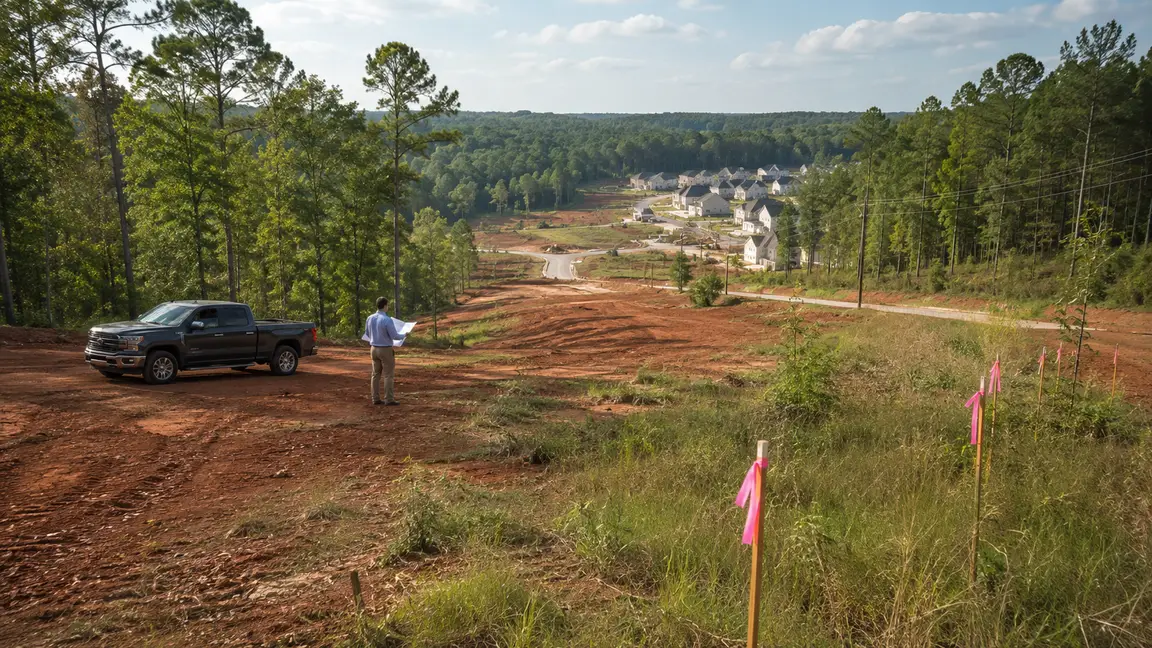
A typical land buyer — someone wanting a hunting tract, a homesite, or a place to hold for the future — is buying the land largely as it sits. A developer is buying the land’s potential: how many lots it could become, what utilities and road access would cost to bring in, and whether local zoning and subdivision rules will even allow the project they have in mind.
That means a developer’s offer almost always comes with contingencies. They’re not just checking title — they’re commissioning feasibility studies, environmental assessments, traffic and utility capacity reviews, and sometimes pre-application meetings with the county or city planning department, all before they’ll commit to a firm price.
The Kind of Land That Attracts Developer Interest
Not every parcel is a realistic developer target. Land that tends to get looked at seriously usually has some combination of these traits:
- Road frontage on a paved, county- or state-maintained road
- Proximity to a growing city or county (Baldwin, Madison, Lee, and Shelby counties have seen the most development pressure in recent years)
- Reasonably level, buildable terrain without extensive wetlands or floodplain
- Existing or nearby access to water, sewer, or at least a viable septic/well solution
- Enough acreage to make subdivision worthwhile — a handful of scattered acres rarely interests a developer the way a larger contiguous tract does
If your land doesn’t fit this profile — say it’s a remote timber tract, steep terrain, or a small in-town lot — a developer sale is probably not realistic, and you’re better off exploring a direct cash sale or a traditional listing instead.
The Subdivision and Zoning Reality in Alabama
This is the part most landowners don’t see coming. Before a developer can legally divide your land into sellable or buildable lots, Alabama law generally requires them to submit a subdivision plat to the local planning commission for review and approval. Depending on the size and complexity of the project, this gets classified as either a “minor” subdivision (a simplified process for a small number of lots) or a “major” subdivision, which typically requires a more involved review and sometimes a public hearing.
A few things worth knowing:
- Zoning has to allow it first. Before subdivision even comes up, the land’s current zoning has to permit the density and use the developer has in mind — otherwise they’re looking at a rezoning request, which adds months and isn’t guaranteed to succeed.
- Selling from an unapproved plat is a real legal risk — for the developer, and potentially for you. Alabama law penalizes selling parcels off a plat that hasn’t been approved and recorded with the county. This is one reason serious developers move slowly and insist on due diligence periods before closing.
- Infrastructure costs often get negotiated into the price. If the developer has to extend a water line, build a road to county spec, or install a lift station, that cost frequently comes out of what they’re willing to pay you for the raw land.
None of this is meant to scare you off a developer sale — it’s meant to explain why these deals often take six months to over a year to close, if they close at all, and why the number a developer floats early in conversations is rarely the number you’ll actually see at closing.
Developer Offers vs. Direct Cash Offers: What’s Actually Different
It’s easy to assume a developer will always outbid a straightforward land buyer, since they’re planning to create more value from the property. Sometimes that’s true. But there are real tradeoffs worth weighing:
Timeline. A cash sale to a direct buyer can often close in a matter of weeks. A developer deal typically involves a long due diligence period — sometimes 90, 180, or more days — while they run studies and pursue approvals, with no guarantee they’ll follow through if the numbers don’t work or the zoning doesn’t cooperate.
Certainty. Developer contracts are usually contingent — on financing, on rezoning, on plat approval, sometimes on pre-selling a certain number of lots. If any piece falls through, the deal can collapse well after you’ve taken the property off the market and turned down other interest.
Price structure. Developers frequently want to lower the price to account for engineering, infrastructure, and holding costs they’ll incur before they see a return. What sounds like a strong number up front sometimes shrinks considerably once due diligence wraps up.
Simplicity. A direct cash sale — the kind we specialize in — buys your land as-is, with no rezoning contingency, no subdivision approval to wait on, and no risk of the deal falling apart six months in because a county planning board said no.
Common Mistakes Alabama Landowners Make With Developer Offers
- Signing a long option period without a clear exit. Developers often want an “option to purchase” that ties up your land for months (or longer) while they pursue approvals, sometimes for a relatively small upfront payment. Read these terms closely — know what happens if they simply let the option expire.
- Not verifying the buyer is a legitimate, funded developer. Ask about their track record, other projects in the area, and how they plan to fund infrastructure costs before you take your property off the market for them.
- Assuming the initial offer is the final number. Developer offers are almost always subject to due diligence adjustments. Get any price protections or minimum-price guarantees in writing if you can.
- Underestimating how long approvals take. County and municipal planning commissions in Alabama can take months to review major subdivisions, especially if a public hearing is required. If you need to sell on a shorter timeline, factor that in.
Frequently Asked Questions
Do I need to subdivide my land myself before selling to a developer? No — most developers prefer to control that process themselves, since they’re the ones deciding the final lot layout and infrastructure design. Trying to subdivide in advance can sometimes limit your options rather than help.
Can I back out if a developer’s due diligence takes too long? It depends entirely on your contract terms. This is exactly why it’s worth having an Alabama real estate attorney review any option or purchase agreement with a developer before you sign — particularly the deadlines and what happens if they aren’t met.
What if my land isn’t a fit for development at all? That’s actually the situation most Alabama landowners are in — plenty of solid land simply isn’t in the right location or shape for a subdivision project. Selling directly to us skips the zoning, engineering, and approval questions entirely; we evaluate your land as-is and make a straightforward cash offer.
If a developer approach has you weighing your options, it helps to see the full picture first. Compare all the ways to sell Alabama land, or skip the uncertainty of a contingent developer deal altogether — get a free, no-obligation cash offer here and know exactly where you stand in days, not months.