
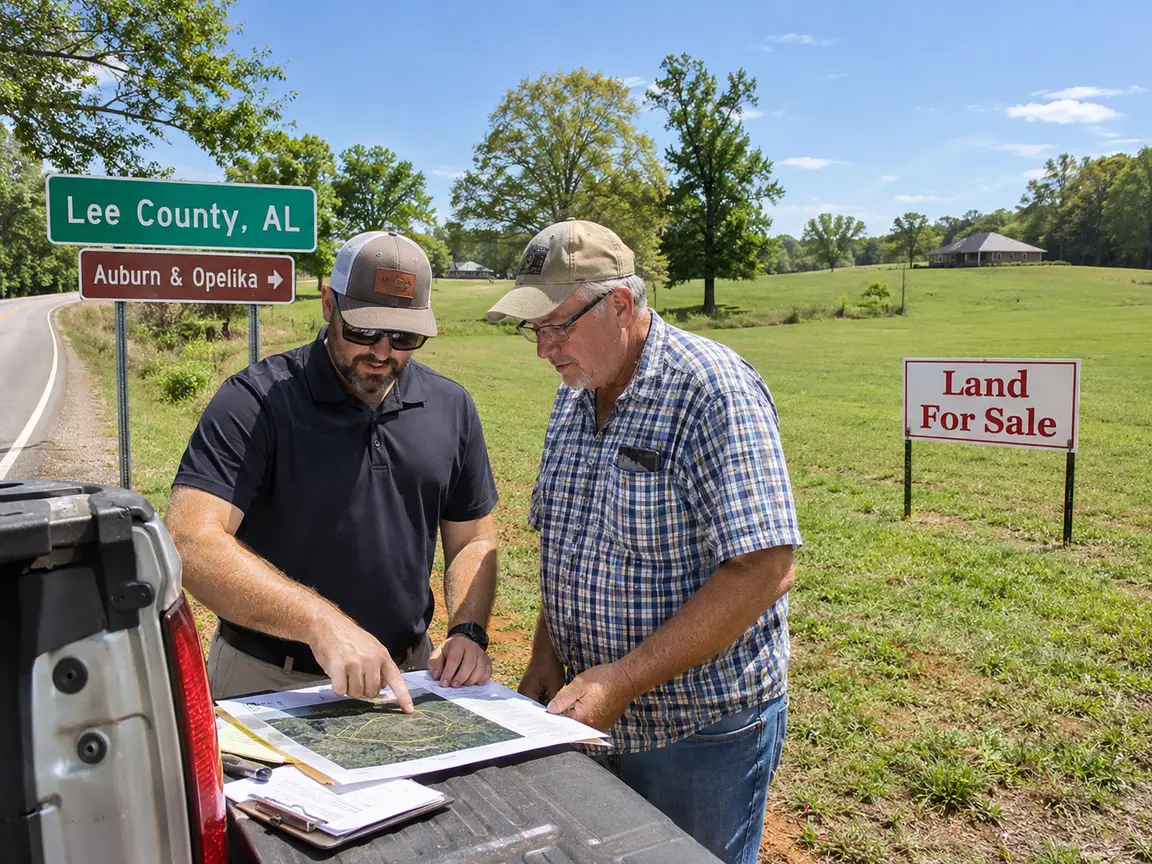
If you own land in Lee County, you own a piece of one of the most talked-about corners of Alabama. Between Auburn University, the steady growth around Opelika, and new neighborhoods spreading out toward Smiths Station, it can feel like everyone wants land here.
But owning land in a “hot” county doesn’t always mean it’s easy to sell your land. Maybe you inherited a wooded tract out past Beauregard. Maybe you bought a lot years ago with plans that never happened. Maybe you’re tired of paying taxes on acreage you never visit. Whatever your reason, this guide walks you through what you should know about selling land in Lee County, in plain English.
Why Lee County Land Is Different
Lee County is home to roughly 190,000 people, which makes it one of the larger counties in Alabama. Most of that population is clustered in Auburn and Opelika, the county seat. Outside those two cities, though, much of the county is still rural, with pine timber, pasture and small family tracts.
That split matters when you sell. A buildable lot with road frontage near Auburn or Opelika can attract plenty of interest. A landlocked 20-acre timber tract near Loachapoka or Salem is a different kind of sale. Buyers for each type are different people, with different expectations about price and timing.
Some of the areas landowners ask us about most include:
- Auburn and the surrounding area, where demand is driven by the university, students, faculty and families
- Opelika, where commercial and residential growth keeps pushing outward
- Smiths Station and the Phenix City side of the county, which draw buyers who commute toward Columbus, Georgia
- Rural communities like Beauregard, Salem, Beulah, Waverly and Loachapoka, where larger tracts, timber and hunting land are common
What Affects the Value of Your Lee County Land
No two parcels are the same, but a few factors come up again and again.
Road access. Land with frontage on a paved county road is easier to sell and usually worth more per acre than land reached only by a dirt road or an easement. Landlocked parcels can still sell, but the buyer pool gets smaller.
Utilities and buildability. Can someone put a home on it? Access to public water, power and a site that will pass a septic evaluation all help. Low-lying land, wetlands or land in a flood zone near creeks can limit what a buyer can do.
Zoning and city limits. Land inside or near Auburn or Opelika city limits may have zoning rules that open up (or limit) development options. Rural land in the unincorporated county tends to have fewer restrictions.
Timber. Many rural Lee County tracts are covered in planted pine. Mature timber can add real value, and recently cut-over land may be worth less until it regrows. It’s smart to know what’s standing on your land before you agree to a price.
Size and shape. Odd-shaped parcels, very narrow strips and tiny lots can be harder to use. That doesn’t mean they won’t sell, but it affects who will buy them.
Your Options for Selling
There’s no single right way to sell land. Here’s an honest look at the three most common paths.
Listing with a Real Estate Agent
An agent can put your land in front of retail buyers and may get you a higher price, especially for clean, buildable lots near town. The trade-offs are time and cost. Vacant land often takes much longer to sell than a house, commissions and closing costs come out of your proceeds, and many retail buyers need financing, which can fall through.
Selling It Yourself
You can list your land online or put up a sign. You’ll avoid a commission, but you’ll handle marketing, phone calls, negotiations and paperwork on your own. For many out-of-state owners, this is hard to manage from a distance.
Selling Directly to a Cash Land Buyer
A cash buyer purchases the land as-is, without listings, showings or waiting on a bank. The price is usually below full retail value, but you skip commissions and months of uncertainty, and you choose the closing date. This option works especially well for inherited land, rural tracts, landlocked parcels, or anyone who simply wants it done.
If you’d like to see these side by side, you can compare all your options for selling land before you decide.
Common Situations We See in Lee County
You Inherited the Land
Inherited land is one of the most common reasons people reach out to us. Often several siblings or cousins own it together, and nobody lives nearby. If the land passed down without a will, it may be heirs’ property, which comes with its own rules in Alabama. Our guide to selling heirs’ property in Alabama explains your options and the buyout rights that protect family members.
You’re Behind on Property Taxes
In Alabama, property taxes are due October 1 and become delinquent after December 31. If they go unpaid, the county can sell a tax lien on your property, and the costs pile up quickly. If you’re behind, or worried about this year’s bill, it’s worth acting before the new year. Our article on Alabama tax liens on land walks through how the process works. Back taxes can usually be paid off out of the sale proceeds at closing.
You Live Out of State
Plenty of Lee County landowners live in Georgia, Florida or farther away. Maybe you moved after graduating from Auburn, or a relative left you land you’ve never seen. Managing a sale from hundreds of miles away is hard. With a direct buyer, you can typically sign by mail or with a mobile notary, without ever making the trip.
The Land Just Isn’t Being Used
Even if nothing is “wrong,” unused land still costs you money every year in taxes, and possibly in mowing, liability and the time it takes to keep an eye on it. If you’ve decided you don’t want it anymore, there’s no reason to keep paying.
How a Cash Sale Works With Us
We keep things simple. Here’s what to expect:
- Tell us about your land. Share the address or parcel number and a little about your situation.
- We research it. We look at access, size, zoning, comparable sales and anything else that affects value.
- You get a written cash offer. There are no fees, commissions or obligations.
- We close with a local title company. The title company handles the paperwork and makes sure everything is done right. You choose the closing date.
You can read more about our simple selling process on our site. We buy land throughout Lee County, including Auburn, Opelika, Smiths Station and the rural parts of the county, whether it’s a small lot or a large wooded tract.
Tips Before You Sell
- Find your deed and tax records. Knowing your parcel number and acreage speeds everything up.
- Check who’s on the title. If co-owners or heirs are involved, it’s easier to get everyone talking early.
- Be wary of anyone asking for upfront fees. Legitimate buyers don’t charge you to make an offer or to close.
- Get your offer in writing. A clear purchase agreement protects you and spells out the closing timeline.
Have more questions? Our frequently asked questions cover the concerns sellers bring up most often.
Ready to Move On From Your Lee County Land?
You don’t have to keep paying taxes on land you no longer want, and you don’t have to wait months for a buyer who may never close. Whether your property is near Toomer’s Corner or deep in the pines outside Beauregard, we’d be glad to take a look. Request your free, no-obligation cash offer and find out what your land is worth to us today.